Description
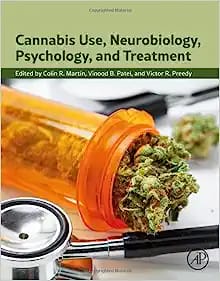
Cannabis Use Neurobiology Psychology, and Treatment First Edition Colin R Martin Vinood B Patel and Victor R Preedy by (Authors)
- Publisher : Academic Press; 1st edition (July 20, 2023)
- Language : English
- FORMAT:ORIGINAL PDF
- ISBN-10 : 9780323898621
- ISBN-13 : 978-0323898621
PREFACE
Extracts from the plant Cannabis sativa contain scores of psychoactive compounds. The principal agent is tetrahydrocannabinol, but there are also other compounds that are neuroactive. Crude preparations of extracts from the cannabis plant is one of the most widely used drugs on a global basis, and the World Health Organization has indicated that 2.5% of the world’s population consume cannabis. Both adverse and non adverse effects of cannabis have been reported that are dependent on the different forms in which it is used. For example, a small proportion of cannabis users will develop psy-
choses or exhibit extreme behavioral problems such as paranoia. There are also neurological changes that may be transient
or long term. Refined extracts of compounds that are related to the active ingredient tetrahydrocannabinol are called can-
nabinoids and include cannabidiol, cannabinol, cannabigerol, and cannabichromene, and approximately 80 other active
compounds many of which have been reported to have neuroactive effects. Unfortunately, some synthetic cannabinoids
have been used recreationally with drastic consequences. However, it is important to point out that the usage of any com-
ponent or regimen requires scientifically vigorous trials and investigations. Treatments and pathways seen in modeling
systems or in vitro need to be verified in vivo. Adverse effects also need to be investigated. The gold standard is randomized
controlled trials and with due consideration of toxic and adverse effects; these chapters provide a framework only.
Effectively, there is a seamless biology between the science behind the neuroactive compounds extracted from C. sativa
and the potential usage of synthetic cannabinoid mimics to procure beneficial effects and the detrimental use of synthetic
compounds. However, most of this information is scattered throughout the literature or focused on those with specific sci-
entific expertise.
The editors have sought to overcome these limitations and advance the understanding of neurosciences and cannabis
with a series of three books collectively called The Neuroscience of Cannabis and Cannabinoids.
It brings together information relating to cannabis and cannabinoids in relation to neurological processes and systems.
The three books are
Book 1: Cannabis Use, Neurobiology, Psychology, and Treatment
Book 2: Medicinal Usage of Cannabis and Cannabinoids
Book 3: Neurobiology and Physiology of the Endocannabinoid System
The Neuroscience of Cannabis and Cannabinoids transcends both the disciplinary and intellectual divides as each
chapter has:
l Abstract (published online)
l Applications to other areas
l Key facts
l Mini-dictionary of terms
l Summary points
The section Applications to other areas is particularly important as it highlights the translational aspect of cannabis and
cannabinoid-related research. The section Key facts gives important information about individual components in each
chapter. The Mini-dictionary of terms is suited for both the novice and those working in other scientific fields or areas.
The section Summary points encapsulates the entire chapter in brief sets of simple sentences.
This book Cannabis Use, Neurobiology, Psychology, and Treatment is divided into ten parts as follows:
1. Setting the scene and introductory chapters
2. Cannabis usage
3. Pharmacological and physiological aspects
4. Neurobiology of cannabis
5. Neurobiology of cannabinoids
6. New and synthetic cannabinoids
7. Biomarkers, analysis and screening
8. Impact on non-neurological systems
9. Treatments and strategies
10. Resources
It has been difficult to ascribe particular chapters to different parts of the book as many chapters can be placed into two or
more sections. Nevertheless, the navigation of the chapters, areas, and key aspects related to cannabis and cannabinoids is
aided by the excellent index at the end of the book.
This book is designed for research and teaching purposes. It is suitable for neurologists, psychologists, psychiatrists,
behavioral scientists, health scientists, healthcare workers, pharmacologists, and research scientists. The audience also
includes federal and state program directors. It is valuable as a personal reference book and also for academic libraries
that covers the domains of neurology, health sciences, or substance misuse. Contributions are from leading national
and international experts including those from world-renowned institutions. The book is suitable for undergraduates,
postgraduate, lecturers, and academic professors.
Editors
Colin R. Martin
Clinical Psychobiology and Applied Psychoneuroimmunology; Institute for Health and Wellbeing,
University of Suffolk, Ipswich, United Kingdom
Vinood B. Patel
University of Westminster, London, United Kingdom
Victor R. Preedy
King’s College London; King’s College Hospital, London, United Kingdom